Virtual Training
(via Microsoft Teams)
Monday 16th November 2026
09.00 to 17.30 (approximately)

09.00 to 17.30 (approximately)
A comprehensive one-day virtual training course that provides learners with an advanced understanding of fire risk assessment principles across heritage buildings and educational premises, two building types that present unique fire safety challenges. Candidates will examine how building design, occupancy profiles, management arrangements, fire protection measures and statutory requirements influence fire safety outcomes. Particular emphasis is placed on balancing life safety with property protection in heritage buildings and managing the complexities of high-occupancy educational environments.
Candidates will be able to:
Our courses are delivered by one of our team of experienced trainers. They are also fire risk assessors who bring a wealth of knowledge and understand the practicalities of working in the field.
Our team of trainers include:


Managing Director
Established the company in 1982. Overall responsibility for strategic running of the company. Other responsibilities: Expert witness cases. Author of a number of BSI publications, […]

Senior Trainer
Joined in May 2022 Carries out fire risk assessments. Delivers fire safety training.
£240 plus VAT per delegate – to be prepaid (by cheque or BACS or credit card excluding AMEX).
Included in the cost: The presentation will be shared with you electronically one week prior to the course. Please note that you must have a working camera on the device that is used, and this must be switched on for the duration of the training.
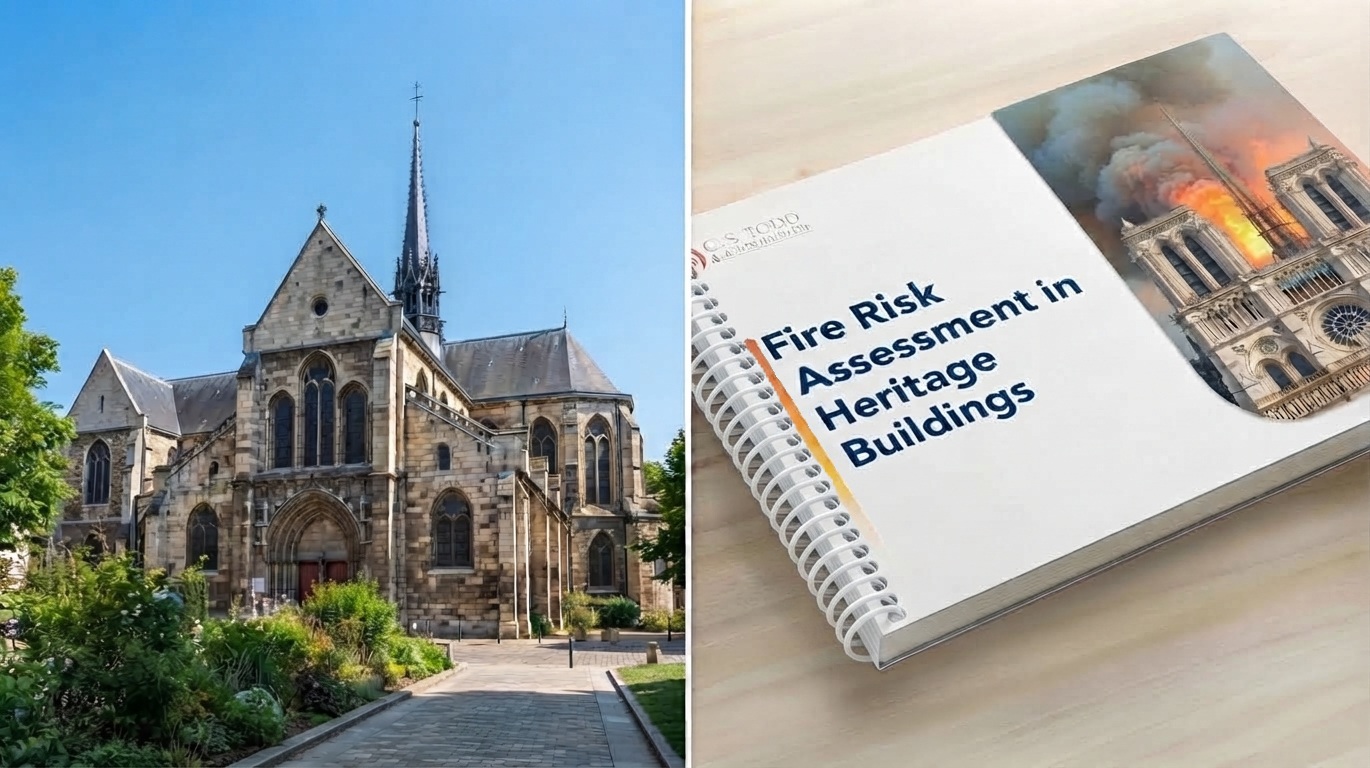
Heritage Buildings: Context and Fire Safety Objectives
Historic and listed buildings, listed building grades, conservation considerations, and the need to balance life safety with property, asset and business continuity objectives.
Fire Risk Assessment in Heritage Buildings
Regulatory requirements, enforcement considerations, retrospective fire strategies, risk-based reviews and proportionate fire safety recommendations.
Heritage Building Fire Risks
Combustible construction, timber elements, lath and plaster, hidden voids, compromised compartmentation, ageing electrical systems, heating systems, lightning protection and arson risk.
Heritage Fire Protection and Management
Fire doors, detection and alarm systems, emergency response procedures, salvage planning, public/private events, and working with conservation bodies.
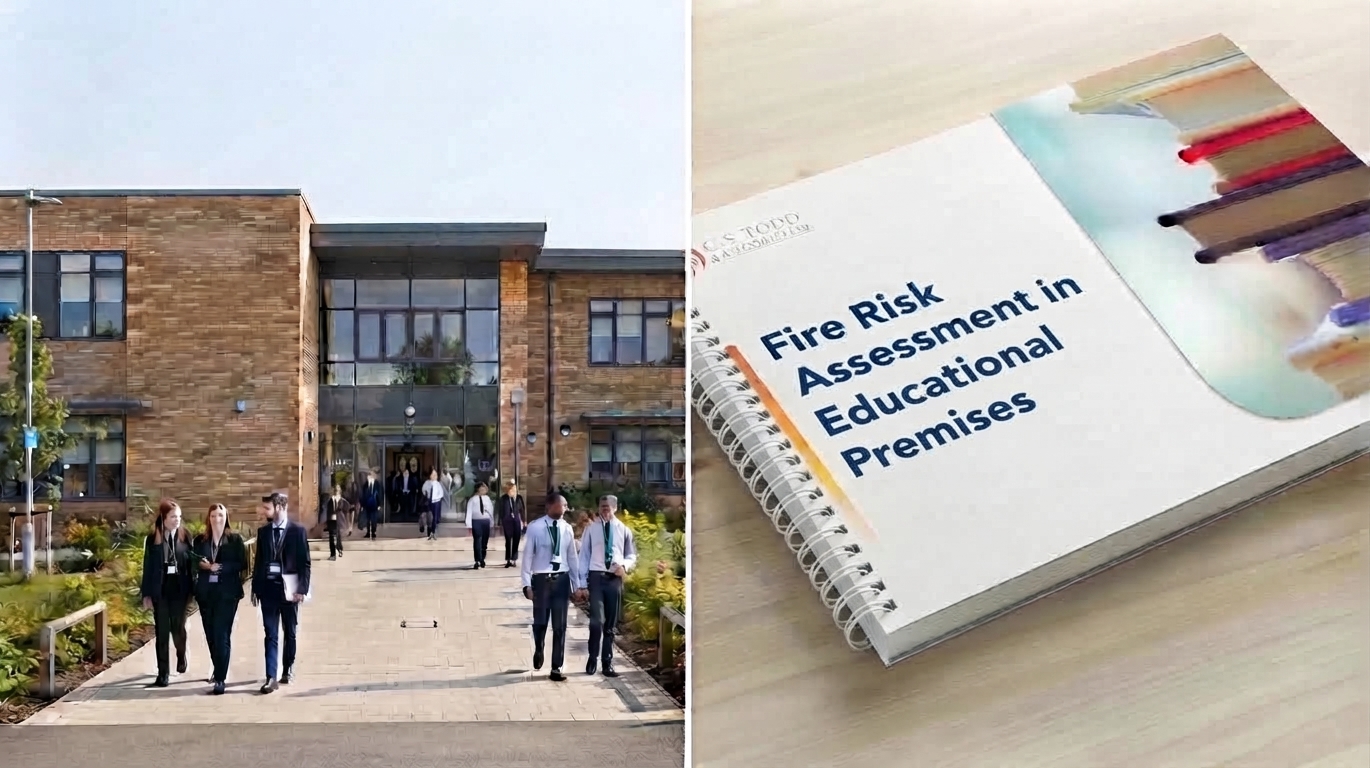
Schools: Context and Occupancy Risk
Why schools are different, occupancy profiles, pupils, staff, visitors, varying ages and abilities, behaviour, out-of-hours use and non-standard layouts.
Guidance, Statistics and Common Causes of Fire in Schools
Relevant guidance including BB100, the DfE Technical Manual, DCLG educational premises guidance, school fire statistics, arson, electrical faults, cooking, equipment misuse and business continuity impacts.
School Fire Prevention and Hazard Control
Arson prevention, site security, housekeeping, combustible displays, laboratories, workshops, kitchens, plant rooms, storage areas, dangerous substances and areas of special fire hazard.
Means of Escape and Fire Protection in Schools
Travel distances, protected stairways, single stairway buildings, exit capacity, seating and gangways, securing exits, inner rooms, open spatial planning, fire alarm systems, emergency lighting and signage.
Combined Case Study Workshop
Practical workshop applying learning to heritage and school scenarios, including risk prioritisation, conservation constraints, arson prevention, compartmentation, escape routes and management controls.
5:30 pm Finish
© 2026 · C. S. Todd & Associates Ltd.